
On this page:
What is a shoreline renewable energy zone?
The Gippsland Shoreline Renewable Energy Zone is different from other renewable energy zones, which are designed to host onshore wind, solar and battery storage projects.
The shoreline zone is not designed for onshore wind, solar or battery storage projects. Instead, it’s a defined planning area for offshore wind developers to run underground cables from the shoreline to the electricity grid.
The zone does not restrict onshore wind, solar or battery storage projects from seeking to develop in the area.
Once the Victorian Access Regime is in place, developers of any proposed projects will be required to apply for a grid impact authority and demonstrate that their projects are unlikely to disrupt generation supplied by the offshore wind projects.
Learn more on our Access and connections page.
Where is the Gippsland Shoreline Renewable Energy Zone?
The Victorian Government has now declared five renewable energy zones zones, along with the Gippsland Shoreline Renewable Energy Zone.
The Gippsland Shoreline Renewable Energy Zone’s location has been determined through our work to develop the transmission required to connect the first two gigawatts (GW) of offshore wind energy to the grid at Loy Yang Power Station, and through consultation with offshore wind developers.
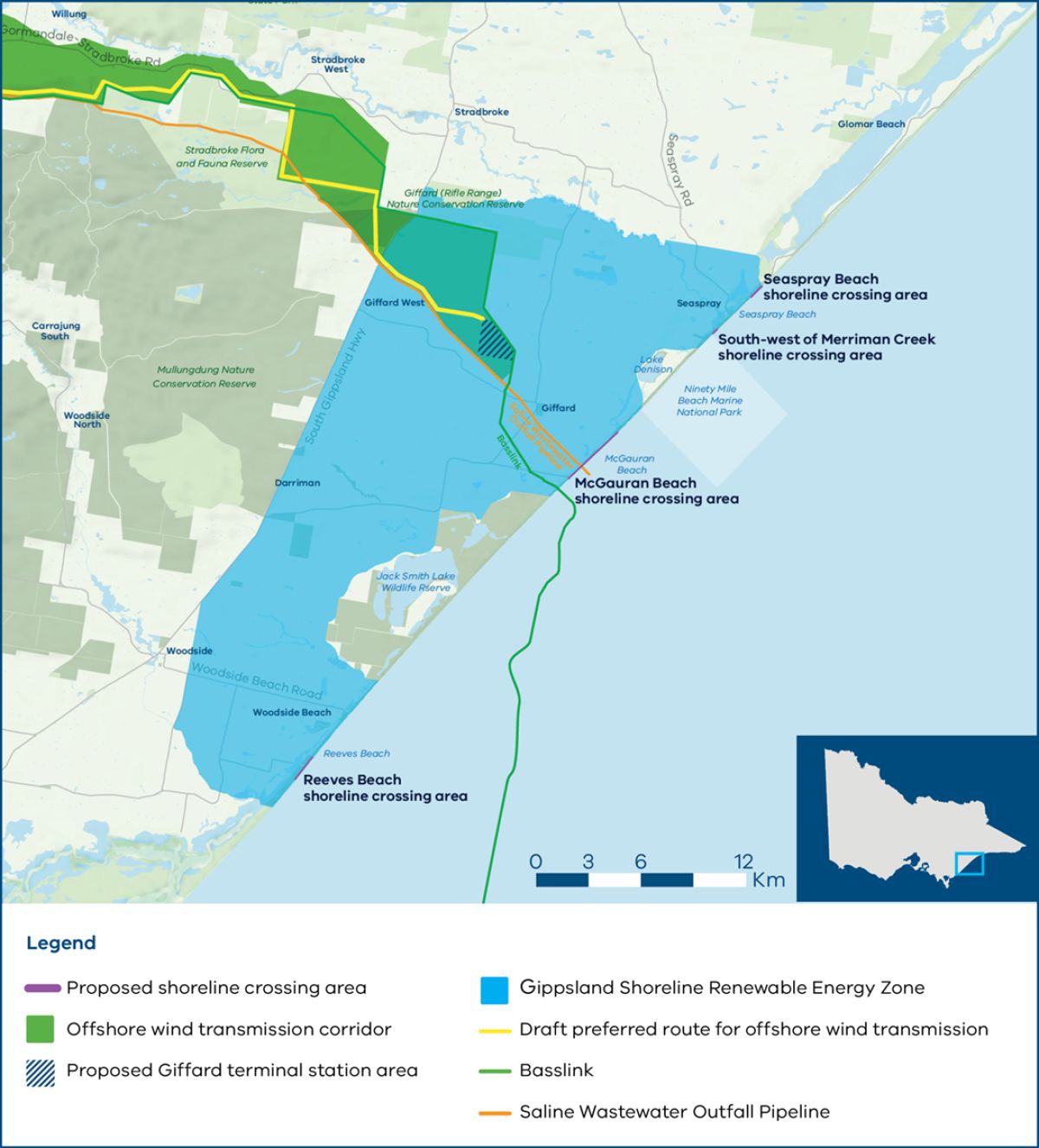
The zone is located in south Gippsland, near Woodside, Giffard and Seaspray. It sits within the boundaries of the Gunaikurnai Land and Waters Aboriginal Corporation and the Wellington Shire local government area.
Shoreline crossing areas
The zone includes 4 specific shoreline crossing areas where, underground cables can come ashore:
- Reeves Beach
- McGauran Beach
- South-west of Merriman Creek
- Seaspray Beach.
These areas were selected to avoid the coast’s most environmentally and culturally sensitive locations, and to minimise technical challenges.
Offshore wind developers must locate their cables within one of these areas. Only developers who are successful in the Victorian Government’s auction process and the Commonwealth licensing process, and who obtain all required planning, environmental and regulatory approvals, will be able to proceed to construction.
Learn more about the shoreline crossings on our offshore wind page.
Onshore infrastructure requirements
All onshore connection infrastructure, from the shoreline to the proposed terminal station near Giffard, must be located within the zone.
This infrastructure must be installed underground, except where access points are required for operation and maintenance, or where specific conditions apply under relevant government approvals and regulations.
View the REZ Orders and Statement of Reasons from the Minister for Energy and Resources at DEECA Energy.
To learn more, read the Gippsland Shoreline Renewable Energy Zone factsheet.
Map of the Gippsland Shoreline Renewable Energy Zone
Visit our online interactive map to see the renewable energy zones in more detail.
How did feedback shape the Gippsland Shoreline Renewable Energy Zone?
We have carefully considered all feedback received during consultation on the Victorian Transmission Plan and other community engagements.
The 2025 Victorian Transmission Plan and the renewable energy zone declarations reflect difficult choices, made by weighing up many factors to deliver a plan that best serves all Victorians.
These decisions balance energy needs, land use, environmental impacts and community concerns.
What we did in response to feedback:
- Avoided environmentally and culturally sensitive areas, including waterways and water bodies, and areas of high value or protected biodiversity
- Made minor amendments to the boundaries of the zone, particularly along the coastline, to ensure that all feasible shore crossing areas were included
- Made no changes to the shoreline crossing areas - these were selected to provide flexibility and resilience for offshore wind transmission planning while avoiding the most sensitive locations
- Clarified that onshore connection infrastructure between the Mean High Water Mark* and the Giffard terminal station will be installed underground, except where access points are required for operation and maintenance, or where specific conditions apply under relevant government approvals and regulations
All proposed projects will continue to be subject to existing planning and environmental controls, including approval processes under the Planning and Environment Act 1987 and Environment Effects Act 1978.
You can read a summary report of engagement activities, timing and the outcomes in the What we heard – REZ consultation report.
What happens if I live or own land in or near the Gippsland Shoreline Renewable Energy Zone?
Offshore wind developers may contact landholders in or near the zone to discuss voluntary, early-stage access for surveys and investigations. VicGrid is developing clear access and compensation arrangements to support this process.
Developers are expected to engage early and honestly, explain what access is needed and why, and offer fair compensation. If you have questions about land access or your rights as a landholder, contact VicGrid at enquiries@vicgrid.com.au or 1800 418 341.
All proposed projects must go through existing planning and environmental approval processes, which includes further community consultation.
Renewable energy zones will also enable new economic benefits for local communities over time as part of the Victorian Government’s draft Renewable Energy Zone Community Benefits Plan.
The introduction of new Renewable Energy Zone Community Energy Funds will support initiatives that create benefits from the energy transition and improve energy and biodiversity outcomes in regions hosting renewable energy zones and new transmission infrastructure.
These benefits will be in addition to any benefits provided directly by offshore wind developers.
Local decision-making that responds to local needs and priorities will be a cornerstone of these funds. Decisions about investments will be made in consultation with regional community reference groups, with broad community and industry representation.
The Renewable Energy Zone Community Benefits Plan is being developed and will be released once finalised. Learn more on our Community benefits page.
Learn more about what happens in renewable energy zonee, including frequently asked questions.
Page last updated: 30/09/26