
On this page:
These 12 projects will upgrade the transmission network across regional Victoria, allowing existing lines to carry more renewable energy across Victoria's electricity grid.
Together these projects have the potential to unlock more than 2.3 gigawatts of new renewable energy, which is enough to provide 16% of Victoria's total annual energy consumption.
They will also deliver $124 million in economic benefits and new opportunities for local communities.
Koorangie Energy Storage System (KESS)
Koorangie Energy Storage System is a 125 megawatt (MW) big battery located west of Kerang. It houses 100 Megapacks (batteries) and features grid forming invertors that maintain stability with renewable energy sources entering the grid.
Status
This project began commercially operating on 11 June 2025.
The following ministerial orders were issued to help speed up the delivery of this important project to help strengthen Victoria's electricity grid:
Benefit
The grid forming invertor part of the project will increase system strength to boost renewable-hosting capacity in the Murray River region by up to 300 MW.
The battery component of the project will allow Victorians to use solar and wind energy even when the sun isn't shining, or the wind isn't blowing.
Synchronous condenser
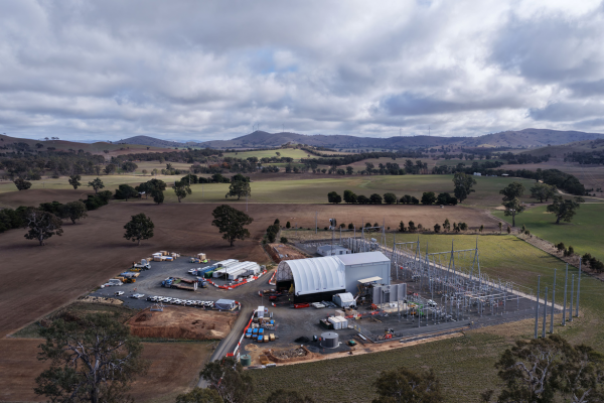
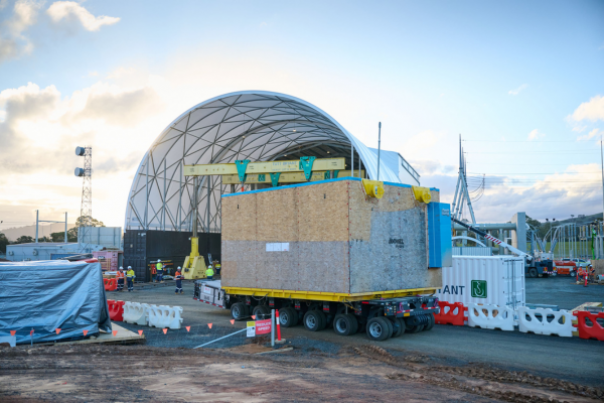
A 250 megavolt synchronous condenser (SynCon) next to the Ararat Terminal Station will provide system strength services. The SynCon is a rotating machine that will help balance the grid as abundant wind and solar energy from the south-west region feeds into the grid.
It can quickly respond to sudden changes in power demand to stabilise the grid.
Status
Australian Energy Operations has started the work. The project is expected to be complete by February 2026.
The following ministerial orders were issued to help speed up the delivery of this important project that will help to strengthen Victoria's electricity grid:
Benefit
The project will unlock up to 600 MW of new renewable energy in western Victoria, providing system strength and maintaining a reliable energy grid for the region, as Victoria transitions to renewable energy.
-
-
-
-
-
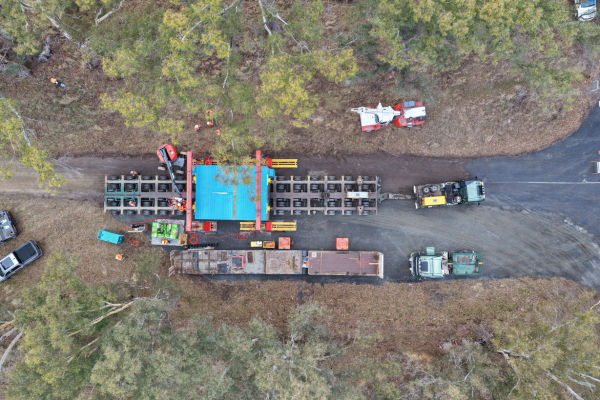
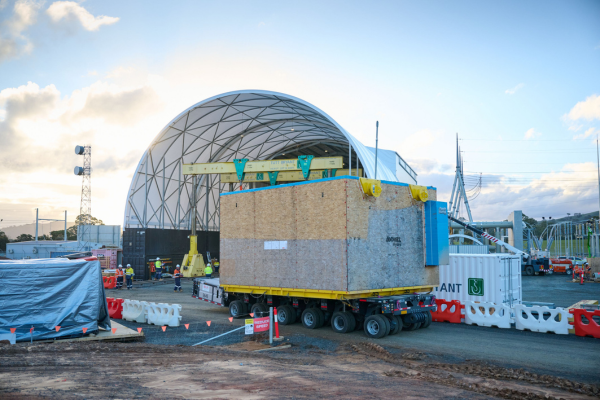
Mortlake Turn-In
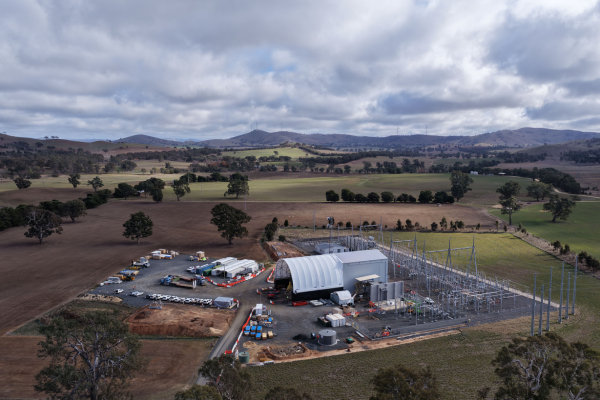
The Mortlake Turn-In project will connect the existing 500 kV Tarrone-to-Haunted Gully transmission line to the Mortlake Terminal Station.
Status
The project was energised by AusNet in August 2025, with practical completion achieved in October 2025.
The following ministerial orders were issued to help speed up the delivery of this important project that is helping to increase capacity for Victoria's electricity grid:
- first Mortlake Turn-In Ministerial Order
- first REZ Stage 1 Projects Ministerial Order
- third REZ Stage 1 Projects Ministerial Order.
Benefit
It will improve network stability and reduce generation constraints in south west Victoria.
Minor augmentations
There are also 9 minor network augmentations projects across Victoria's Murray River, South West and Central North regions.
Status
Five minor augmentations have been successfully completed. View the status of each of these augmentation projects in the table below.
The following ministerial orders were issued to help speed up the delivery of these important projects that will help to strengthen and modernise Victoria's electricity grid:
| Project | Project name | Provider | Status |
|---|---|---|---|
Project 1 | BATS-TGTS-MLTS | AusNet GPG Lumea | Completed |
| Project 2 South West | HYTS-MLTS | AusNet | Completed |
| Project 3 South West | KTS-SYTS | AusNet | Completed |
| Project 4 South West | MLTS A1 | AusNet | Completed |
| Project 5 Murray River | RCTS-KMTS-MRTS-HOTS-BGTS | AusNet PowerCor Atmos BayWayRe | In progress |
| Project 6 Murray River | RCTS-KMTS-MRTS-HOTS-BGTS | AusNet APA | In progress |
| Project 7 Murray River | Various terminal stations | AusNet TOA2 Lumea | To be completed in 2026 |
| Project 9 Central North | DDTS H3 TR | AusNet | Completed |
| Project 10 Central North | Axedale Solar Farm Runback | AusNet | To be completed in 2027 |
Benefit
These 9 minor power-system augmentations will help address network constraints, increase capacity within the existing transmission network and reduce renewable generator curtailment.
Page last updated: 26/02/26